

SONTE film in smart building systems – integration with BMS and KNX
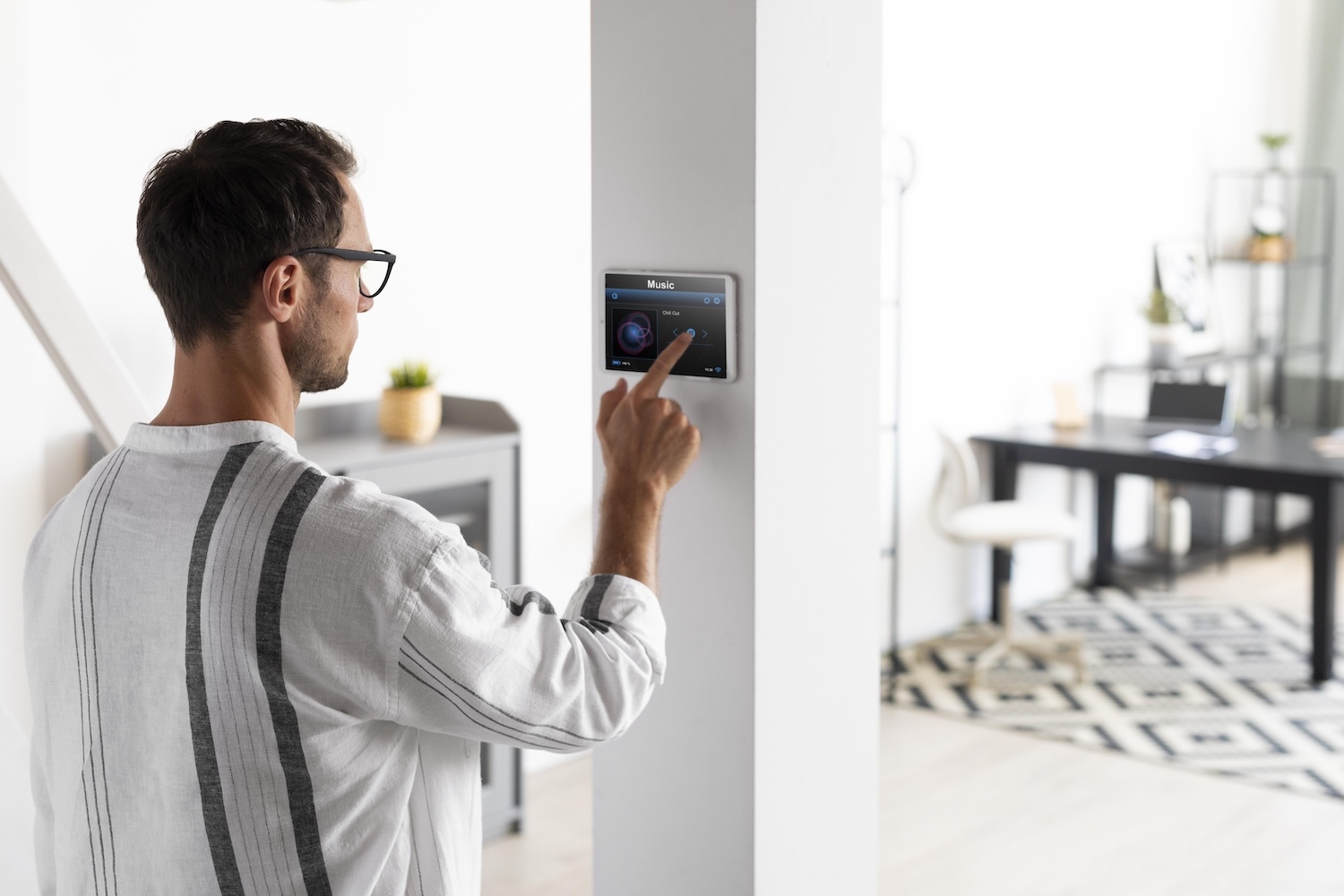
One of the most interesting aspects of smart buildings is that more and more elements of a space can be connected to the building automation system. A meeting room booking system can be integrated with the company calendar, lighting can adjust to the working mode, and access to rooms can be controlled through an app or a central building system. What many people don’t realize, however, is that privacy on glass walls can also be controlled in a similar way.
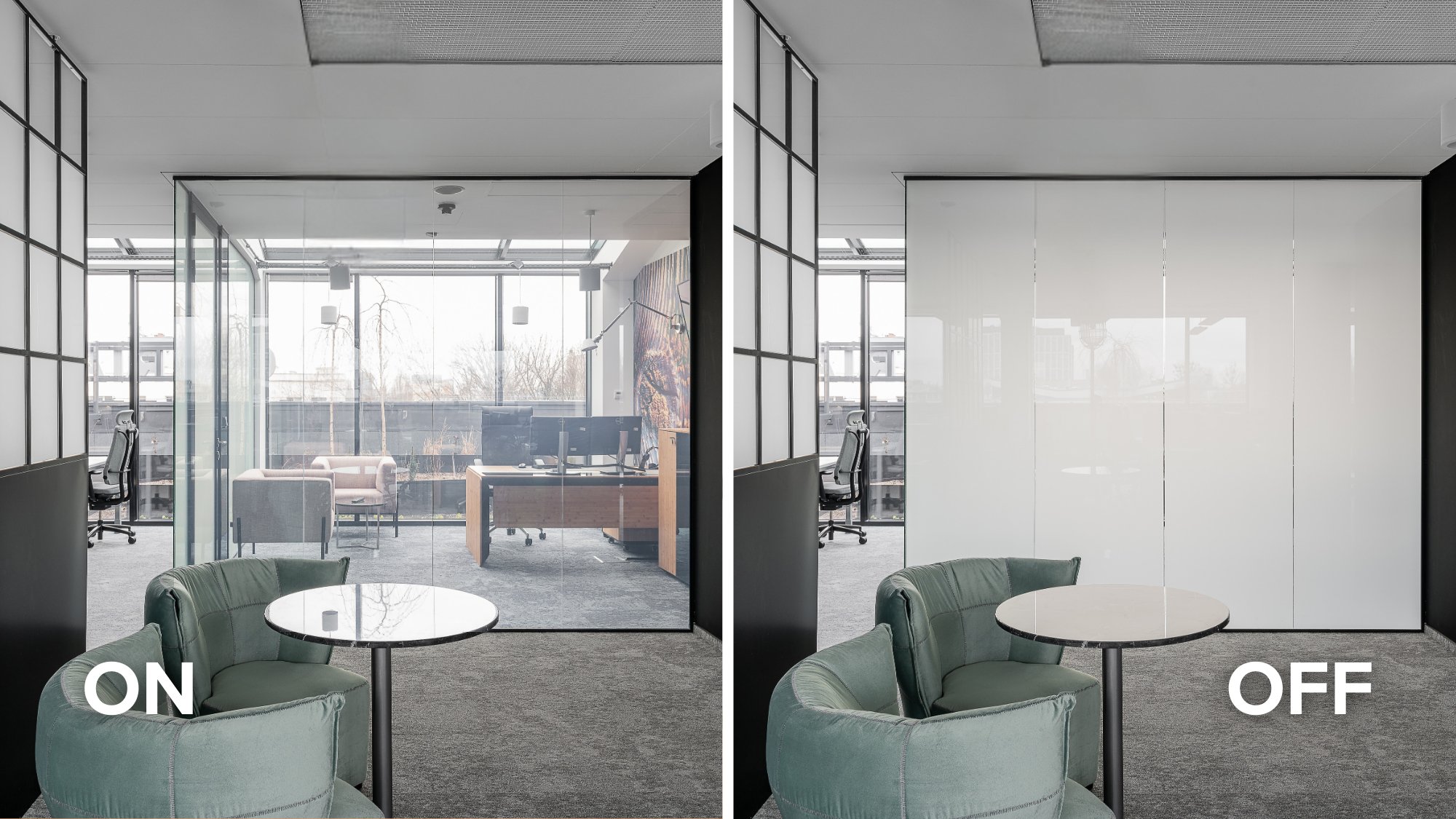
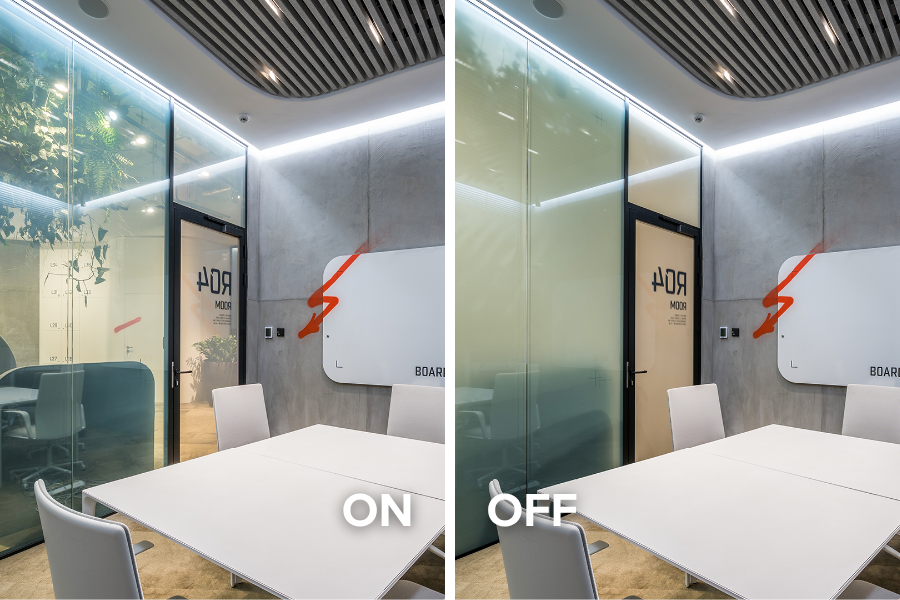
SONTE liquid crystal film can become part of a Smart Building system. This means the glass can switch from transparent to frosted automatically — for example, when a meeting starts, at specific times of day, or directly from the building control application.
In the following sections, we explain how SONTE film integrates with BMS and KNX systems, and what technical parameters an integrator should consider when planning such a solution.
Can SONTE film be integrated with a smart building system?
Yes. From the perspective of building automation, SONTE film functions like a standard electrical load that can be controlled by supplying or cutting off the power voltage.
Building automation systems such as BMS or KNX do not communicate directly with the film itself. Instead, they control the 230 V mains voltage that powers the transformer supplied with the SONTE installation. The transformer reduces the voltage to the film’s operating level, approximately 60 V AC, enabling it to function safely on the glass surface.
In practice, integration involves using a relay module within the automation system. This module determines whether the 230 V power supply is delivered to the film’s power unit or disconnected. When voltage is supplied, the glass becomes transparent; when the voltage is cut off, it returns to the frosted state.
For the integrator, this means that SONTE film does not require complex communication with the automation system. It can simply be treated as a standard electrical component controlled by a relay.
In simple terms: the building system switches the transformer power on or off, and the film changes the glass from transparent to frosted or back again.
How does SONTE film integrate with BMS or KNX systems?
Integration of SONTE film with building automation systems does not rely on direct communication with BMS or KNX. In the standard configuration, control is achieved by managing the power supply to the film’s transformer.
This allows the integrator to include SONTE film in the system in the same way as other electrical components controlled by a relay. Such an approach makes integration predictable and compatible with various automation systems, as it does not require a dedicated communication protocol or a special control module on the SONTE side.
In practice, it means one simple thing: if the automation system can control a relay supplying a 230 V device, it can also control SONTE film.
Does SONTE require a dedicated smart module?
No. Integrating SONTE film with building automation does not require a dedicated smart module or a special controller on the SONTE side. The automation system treats the film installation in the same way as any other electrical device in the building.
In practice, this means the integrator uses a standard relay module available within the chosen automation system, such as KNX, Loxone, or another BMS platform. This approach offers a significant advantage for integrators: there is no need to install additional communication gateways, API controllers, or manufacturer-specific modules. Standard automation system components are sufficient.
In simple terms: if the smart system can control a device through a 230 V relay, it can control SONTE film in exactly the same way.
What automation functions can be connected to SONTE film?
Once SONTE film is integrated into a building automation system, its operation can be linked to various space management functions. The transition from transparent to frosted glass can be triggered automatically, depending on the logic programmed in the system.
The most common scenarios include:
-
Integration with meeting room booking systems – the glass switches to frosted mode when a meeting begins.
-
Room scheduling – privacy can be activated at specific times of the day.
-
Control via the building app – users can switch the film on or off using their phone or a system control panel.
-
Integration with sensors or automation scenarios – the film can operate as part of a broader automation logic defined by the integrator.
In practice, this means SONTE film can become part of the same automation system that manages other functions within a smart building.
What technical parameters should an integrator know?
From the perspective of a building automation integrator, the key point is that SONTE film does not require special communication protocols or dedicated controllers. What matters instead are the basic electrical parameters of the installation.
The most important technical information includes:
-
Transformer power supply: 230 V – the mains voltage supplied to the film’s power unit,
-
Film operating voltage: approx. 60 V AC – the working voltage delivered to the film by the transformer,
-
Control via relay module – the automation system supplies or cuts off the voltage powering the transformer,
-
Average energy consumption: approx. 5 W per m² of film,
-
Power supply routed to the glazing surface where the film is installed.
From a system design perspective, this means SONTE film can be treated as a standard electrical load controlled by a relay within the automation system.
For the integrator, the key point is simple: the BMS controls the 230 V supply, while the SONTE transformer provides the correct operating voltage for the film.
Planning SONTE film in a building with an automation system?
If your project includes SONTE film together with a BMS or another building automation system, it is best to discuss the integration at the planning stage. We will help you select the right solution, explain the technical requirements, and show how to incorporate glass privacy control into the building management system.
Contact us, we’ll answer your questions and help you plan the installation.