

White, grey, or black? How to choose the right SONTE film color
Contents
- White, grey, or black? How to choose the right SONTE film color
- How PDLC film works and why color matters
- PDLC film and light - what you should know
- Lighter vs. darker films - the key differences
- Three SONTE film colors - what it means in practice
- Choosing the right SONTE film color - a shared decision based on experience
- Checklist: What to consider when choosing a PDLC film color
- PDLC film colors - FAQ
Why the place of application matters
How PDLC film performs depends on where it is used. It behaves differently on internal glass partitions than on external or façade glazing. The decisive factors are the amount of light and whether it comes from inside or outside the building.
For this reason, the same film color may provide optimal privacy in one case, while in another it may not fully utilize its potential.
What you’ll find in this article
The purpose of this article is to clarify the topic of SONTE film colors and show how to choose them consciously, based on the type of glazing, the location of the partition, and the specific lighting conditions.
In the sections below, we explain the differences between white, gray, and black film and explain where each option performs best. This way, selecting a color is no longer a matter of guesswork but becomes a deliberate and informed design decision.
How PDLC film works and why color matters
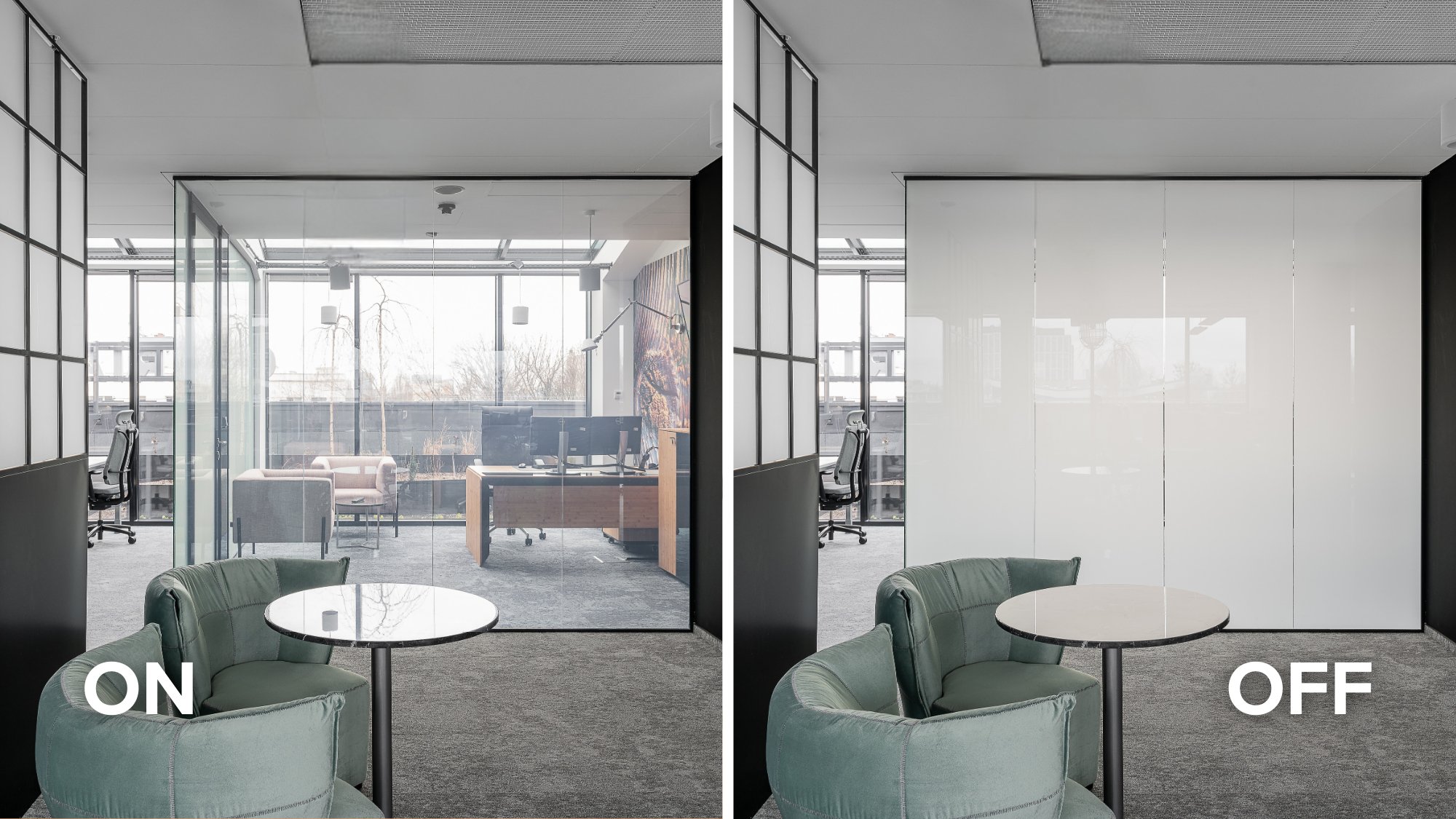
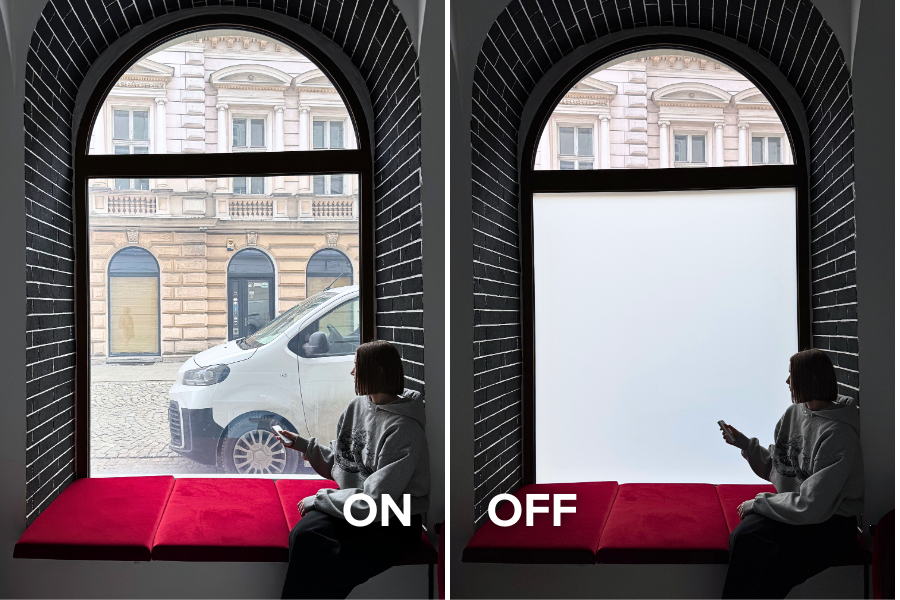
PDLC (polymer dispersed liquid crystal) film works by changing the alignment of liquid crystals under an electric current. When the film is turned off, the crystals are randomly arranged and scatter light, creating a milky, opaque effect. When voltage is applied, the crystals align in parallel, allowing light to pass through and making the glass transparent.
At this point, many people assume that the color of the film affects only its appearance. In reality, the color determines how the film interacts with light and light is the key factor in how the technology performs.
PDLC film and light – what you should know
In practice, PDLC film does not “block” light, it diffuses it. In glazing exposed to strong sunlight, the color of the film directly affects visual comfort. Very bright variants may create a sense of excessive brightness, which is why, in such cases, darker tones are often recommended to better control light intensity.
Lighter vs. darker films – the key differences
In simple terms:
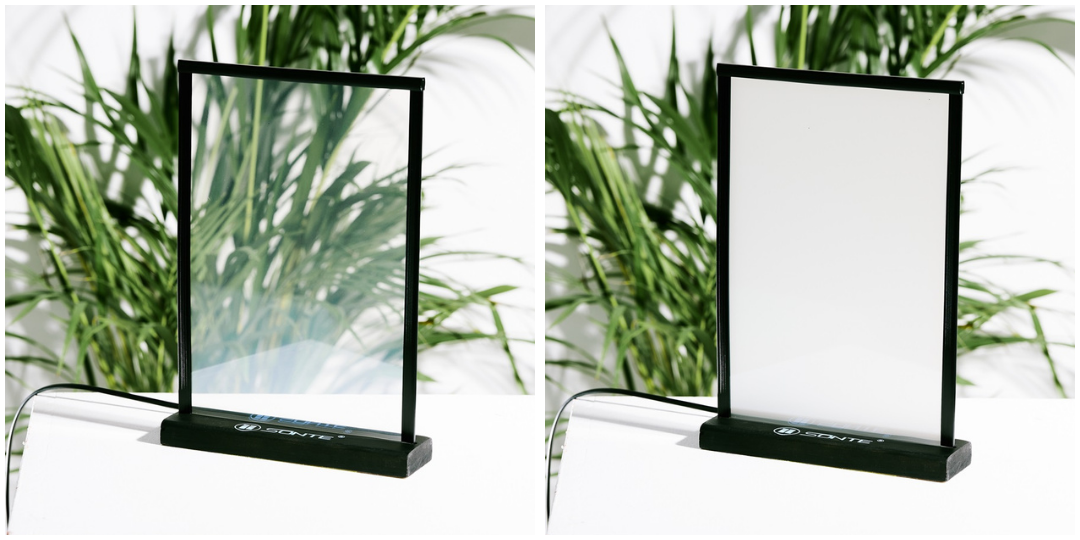
- Lighter films perform best in spaces where lighting is more controlled and primarily comes from inside the building.
- Darker variants are a good choice in areas exposed to strong external light that significantly affects how the glass is perceived.
This is why there is no single universal PDLC film color that works for every project. The right choice should take into account:
- the type of glazing (internal or external),
- the location of the partition and its exposure to sunlight,
- the desired visual effect and user comfort.
Only by considering all these factors together can you select the right film color consciously and make the most of PDLC technology.
Three SONTE film colors – what it means in practice
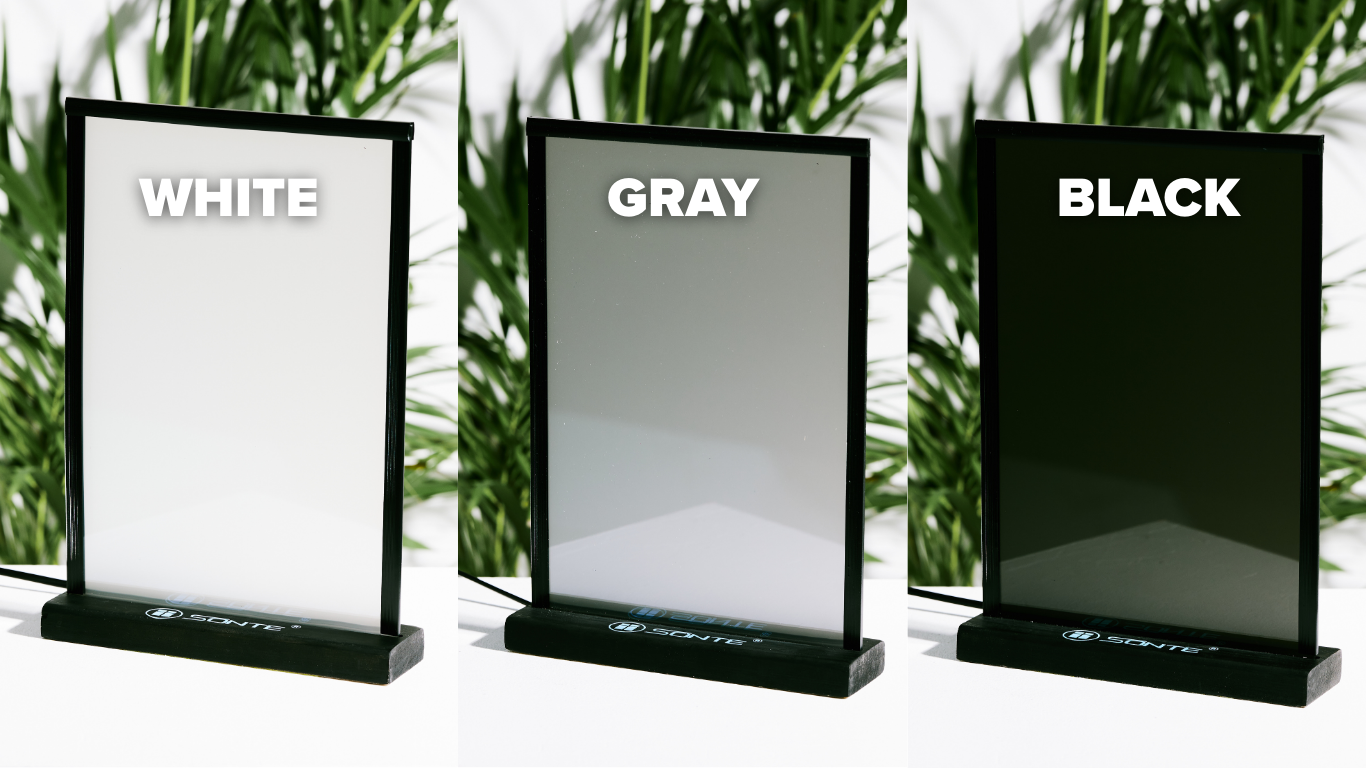
SONTE film is available in three color variants: white, gray, and black. Although the differences may seem subtle at first glance, each option is designed for specific application conditions. The color affects not only the visual appearance of the glass, but more importantly how the film performs in a given environment.
Below, we look at each variant individually, focusing on when it performs best and why it makes sense to choose it in those situations.
White SONTE film – Milky White
Gray SONTE film
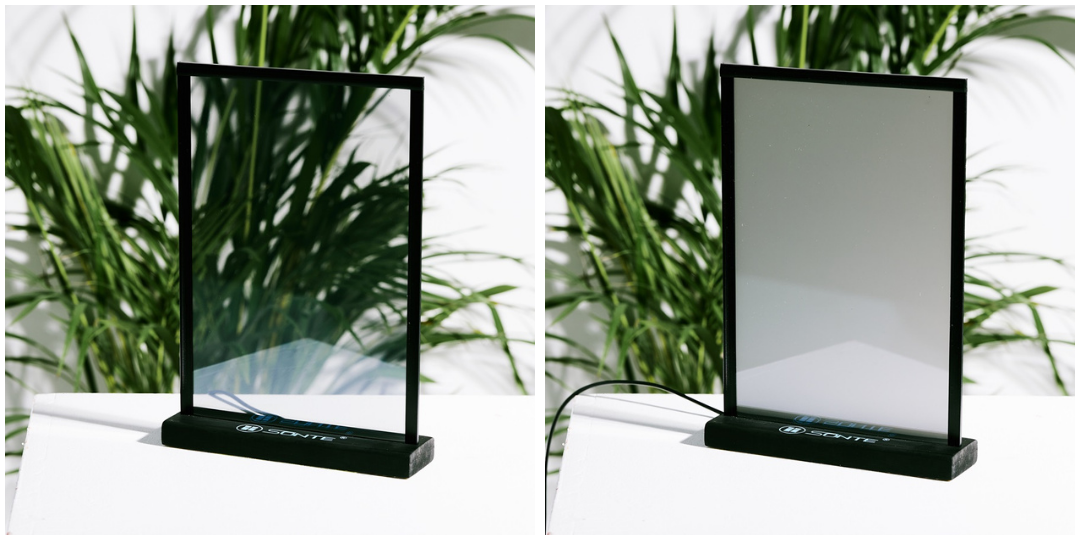
Gray film offers a balance between maximum brightness and improved light control. Its slightly tinted shade helps reduce glare and reflections while maintaining a modern, neutral appearance of the glazing.
This variant is recommended for spaces where:
- there is increased exposure to sunlight,
- light can be intrusive but does not require significant reduction,
- achieving a balance between visual comfort and aesthetics is important.
Gray SONTE film works particularly well in:
- offices with southern or western exposure,
- modern spaces with extensive glazing,
- meeting rooms and work areas where glare is an issue.
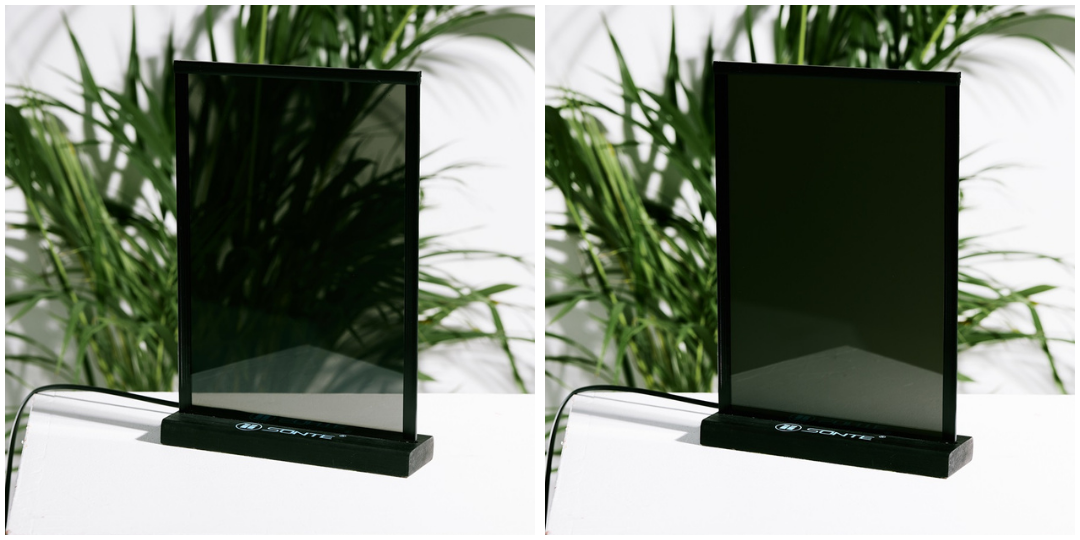
Black SONTE film
Black film is designed for the most demanding lighting conditions. It provides the highest level of UV and IR reduction and significantly limits intense sunlight, resulting in greater user comfort.
This color is primarily used in spaces where:
- the glazing is heavily exposed to sunlight,
- external light is the dominant source of illumination,
- effective control of light and heat is essential.
Black SONTE film is often selected for:
- façades and large exterior glazing,
- offices and commercial spaces exposed to strong sunlight,
- premium projects where a stable visual effect is required throughout the day.
Not sure which color will work best for your project? Consult with us to choose the right SONTE film.
When not to choose white PDLC film
- In heavily sun-exposed external glazing and façades,
- On large glass façades where direct sunlight dominates,
- In spaces where visual comfort is more important than maximum brightness.
When not to choose gray PDLC film
- In spaces where maximum interior brightness is the priority,
- In poorly lit internal areas,
- Where glare or excessive light is not a real issue.
When not to choose black PDLC film
- In typical internal partitions without strong sun exposure,
- In small spaces where maintaining a light, airy feel is important,
- Where intensive light control is not actually required.
Choosing the right SONTE film color – a shared decision based on experience
In practice, selecting the right PDLC film color works best when it is based on technical analysis rather than assumptions or intuition. That’s why, in SONTE projects, we recommend a specific color variant after evaluating the type of glazing, lighting conditions, and the function of the space.
Of course, every project begins with the client’s needs and vision. If an investor or architect has specific aesthetic goals in mind, we always take them into account and assess them against the actual technical conditions. Our aim is not to impose solutions, but to select a film color that aligns with expectations and performs in the best possible way in everyday use.
Over time, we have developed a set of proven configurations that consistently perform well in specific applications. This allows us to recommend solutions with confidence, ensuring the optimal visual and functional effect, rather than relying on random or one-size-fits-all decisions.
Why film color selection matters
Not every PDLC film supplier offers the option to tailor the color to a specific project. Often, there is just one “universal” variant intended to work in every situation. In practice, this means adapting the project to the product, rather than adapting the product to the actual glazing and lighting conditions.
At SONTE, we focus on delivering the best possible solution for each client. With white, gray, and black variants available, we can match the film’s performance to specific lighting conditions and the function of the space, instead of applying the same solution to every project.
Checklist: What to consider when choosing a PDLC film color
- Where is the glazing located (internal or external)?
- How intense is the light in that space?
- Is privacy or light control the main priority?
- How will the space be used on a daily basis?
Have a project and unsure which film color to choose? Contact us, we’ll help you select the best solution together.
PDLC film colors – FAQ
1. Does the color of PDLC film affect the level of privacy?
The color does not change the core privacy function itself, but it does influence how clear and comfortable the effect appears under specific lighting conditions. In stable lighting, the differences are minimal. However, in strong sunlight, choosing the right color results in a more consistent and visually balanced outcome.
2. Does white film always provide the best result?
Not necessarily. White film works exceptionally well in interior spaces where maximum brightness is desired. In external glazing or areas with strong sun exposure, gray or black film may deliver a better overall result.
3. Does black film darken the room?
Black film is not designed to darken a space, but to better control intense sunlight. It is used in areas where external light is dominant and significantly affects user comfort.
4. Can the film color be changed after installation?
No. The color of PDLC film is selected during the design and installation phase. That is why a prior analysis of glazing conditions and a technical consultation are essential before making a decision.